
Keep Your Lamps Trimmed and Burning
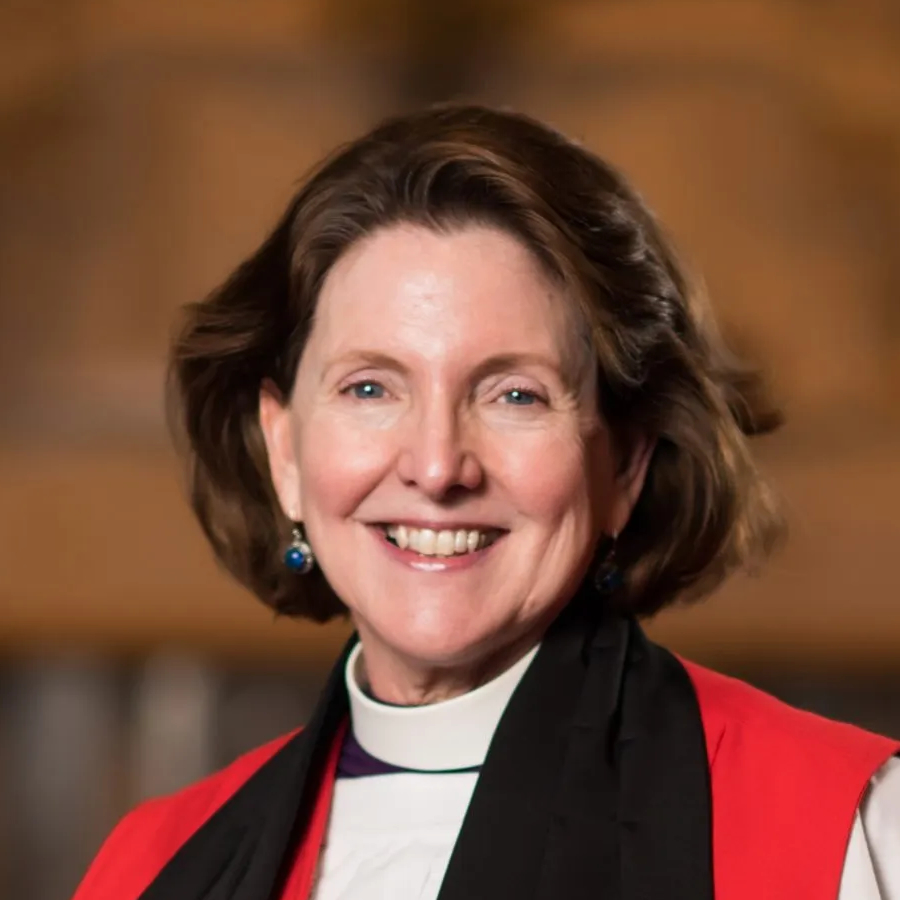
The 24th Sunday after Pentecost, Year A Sermon for November 8, 2026

In the name of God, who by the Word and through the Spirit, creates, redeems, and sanctifies. Amen.
Epiphany, Epiphany, how I have longed to meet you. Haha. John and I go way back. I confirmed him in Charlotte, North Carolina. I lived down the road in Durham, North Carolina. But then we reacquainted ourselves over a year ago.
Y'all, he cannot stop talking about Epiphany. He loves you so much. And we kept thinking, and we were talking, and we were talking about all kinds of things. And today, to be with you for baptism and confirmation and reception, well, can we just say it's a little bit of a dream come true for us. So, this is a great morning.
The cherry on top is that Archdeacon Beth Drew is with us this morning. And, you know, we just don't have enough deacons, by the way. If you feel like you want to be a deacon, go talk to the Archdeacon. But so we get Beth around, and because this is just such a special day, y'all got yourselves a deacon for the day, at least for a day, a deacon of the church.
So this is a great, great day. And, gosh, Charlotte and Norah, y'all really understand how excited we are for you all and your family.
So let me just kind of get to it, because I remember as a young priest, I could not stand it when rectors, these people, would talk about their children, and it was worse when they would talk about their grandchildren. But now that I'm a grandparent, well, I see the light!
I have two grandsons, well, I have four grandsons. I'm going to talk about two of them, and then I have a granddaughter. But my two grandsons that live down the street from me, let me just say, they have big feelings. This is a new phrase I'm unfamiliar with. I think I was the kind of mother that said, keep your big feelings to yourself, which was apparently the wrong way to parent. We need to understand everybody has big feelings, and how you deal with them are important. And my grandchildren, my two grandchildren boys, Henry and Theo, have very big feelings.
Now, the younger one is a bit of a provocateur. So his feelings are… “How can I irritate you, and press all boundaries possible?” And that's completely developmentally appropriate. But my older one, the older brother, Henry, a little bit like his grandmother. He's a worrier. He has big feelings, and he thinks… he is so thoughtful that he is too full of thoughts. Do you know what I mean? And I just am like, you're eight years old, and there's a part of me that wants to say, “Don't worry!” And the other part of me remembers that when I was his age, I worried about all kinds of things.
And I'm so grateful that he has the kind of family that's going to let him talk out loud about the things he's worried about.
The early church that Paul is writing to in Thessalonica, they had big feelings. And they had a lot of worries. You see, they thought they heard Jesus say after he ascended, “I'll be right back!” And so they're like, “Oh, he's coming any time, any minute now, Jesus is coming… He's late. I don't see him. I thought he'd be here by now.”
They're very worried because they had thought they were so, so excited about what they were experiencing. And a lot of these folks, they had not walked with Jesus of Nazareth. They had not stood at the cross. They weren't necessarily there on Easter morning, but they were filled with a power of God's presence as presented in Jesus, that they just could not wait for that special return.
They thought they would come in his lifetime, but then, church, guess what started happening? Some of the saints started dying, and this caused big feelings in the early church. “Wait, that is not how we thought it was going to go.”
Has that ever happened, where Christians have sat there going, wait a second, that's not in the Book of Common Prayer. That's not what it said in Leviticus, right? We want to get into the weeds of our expectations of how the script of God goes. And when it doesn't go well, according to our plans, we get anxious.
And I have to tell you, I do think anxiety is one of the most corrosive toxins in our human system. Because anxiety robs us of the moment that actually God is quite near us, even if hard to see.
So Paul is saying to those young Christians, those new Christians, yes, there appears to be a delay. But what is a delay to us humans is the blink of an eye for our God. And this is where we need to start teasing apart worry and anticipation and faith.
One time I kept my granddaughter, Mila, whose parents… I never did this, I never did this, they went on a trip by themselves, though they had small children! I did not do this. And so a three-year-old Mila was with me, and during the daytime, Mila was as happy as she could possibly be.
Oh, but come bedtime, what do you think happened? “Where's my mommy?” “Where's…” you know, the anxiety, and it was real. It was deeply real to Mila. She did not have the assurance or the faith that her mom and dad would be back. But pop pop and I did. And we could surround our children, our grandchildren, when they were anxious and worried and fearful and sure that the world was coming to an end. We could surround them with our hope and our anticipation, that though the moment might seem dark, the promise is good. And we could be lights of that promise.
That's anticipation.
Yep, the kingdom of God is not here yet. And yet, it is. If you don't like paradoxes, you are not going to be a good Episcopalian. If, you know, what is that? It is, it not is, he's dead, he's alive. You know, what is this thing with Christianity? That is something like a cross, a sign of death becomes a sign of life. But if you love it, we got lots of it.
The kingdom of God has changed everything. It has broken in with the crucifixion, resurrection, and ascension of Jesus. The world is not the same and it often still looks the same.
But in baptism, we die to an old story. We set it down and we rise to a new creation that God is making all things new. It's just at times, we can't see it. And so we have the gift of hope. And an aspect of hope is anticipation.
(Remember, was it a Carole King song? Anticipate, I can't, I can't, don't, let's don't that. We won't do that one, Ellen. But just kind of hum a little anticipation to you.)
If you're, you know, kind of in advanced placement liturgics, which most of you would not be, but some of you might notice that, wait a second, it's not advent, but we're hearing a lot of adventy kinds of things right now. We're starting to hear in the lessons and even in some of the music, some of the things like, wait, Jesus is coming, Jesus is coming! So there's an element of, so I think we're in preseason, we're in preseason of Advent here at the end of ordinary time or Pentecost. The seasons are changing, yet each season has an element of the other season, doesn't it? Advent being the new year, we're at the end of the year in the church calendar.
And I think this is a wonderful thing about this idea of here and not here and yet, that anticipation is its own gift.
Because the fit, that anticipation that your child comes home from the war, the anticipation that you're going to wake up Christmas morning and you have no idea what your gift is, but you just know it's going to be good. That anticipation that we don't know what God is up to, except that God is always up to good.
And that's where we start to let anticipation, based in the hope in Jesus, cast out the works of the devil, which I would say is an obsession with anxiety.
I'm not saying we can just magically turn it away, but we can begin through spiritual practices to resist the magnetic field of fear and anxiety and lean into the hope, the joy, the love of such a community as this. Oh, Norah, Charlotte, y'all are gonna join such a community of hope… which finally brings us to this bizarre story about the bridesmaids.
Now, let me just have a little caveat here on another day when y'all invite me back. I'm gonna give you a whole little lecture on the problematic imagery of Christ the Bridegroom, and the Church the Bride, and some sort of inherently problematic things that has. But we will set that aside for now. And then also there's this part about, it didn't seem like this one set of bridesmaids is very nice to that other set of bridesmaids. That's a little troubling, right? That's a little troubling.
But here's the thing. So what I really think we need to think about is, first of all, yes, we want a very egalitarian world because that leaves the room for Jesus to be the one, and we are not. Only takes one Savior, not many, right? Some of us are still learning that lesson, right? So, there is this entity of God, Father, Son, and Holy Spirit, that is superior to all the rest of us, and in God's eyes, we are all equal.
But those bridesmaids, those bridesmaids, they are filled with anticipation that this one who will care for all is coming, and they're ready, or at least some of them, and this is what those lamps are, right? They're keeping their lamps… don't start yet, Ellen, not yet. They're keeping their lamps trimmed and burning. We'll get back to that, right?
Because we as disciples, we have to be able to see in the dark, because my friends, we know this. We don't really want to share it that much with the younger ones. The world gets dark sometimes. (Guess what? The children know that.) It gets dark. It gets scary. There are things that hurt, and there are times our hearts will break, but if we keep our lamps trimmed and burning, it lets us see that actually God is very, very near.
God is ready to surprise us, not at the end, but in every moment of life, with a new insight into where love casts out fear, where joy casts out despair, and where hope casts out all that tries to pull us into anxiety.
Keeping our lamps trimmed and burning means, what are the things you're doing to keep your faith fresh and available and invigorated and burning? And guess what? You can't do that for someone else. What Norah and Charlotte will learn is the faith of their parents and their godparents and their family. The more we can keep our lamps trimmed and burning, the more others have to learn how to do that for themselves. It is in community… Is it Kyle? Kyle, I can't tell you how to row your boat, but I can say, come on in, the water's good and we're gonna do it together, right?
Come on, Charlotte and Norah, let's do this together. But we each find our own way. That, again, that paradox, both can be true.
Keep your lamps trimmed and burning. Every day, find new ways. Find… this is gonna be your advent resolution… Find new ways to trade worry in for anticipation. Find ways to trade your despair. There's plenty to despair about. Although, I'm feeling a little less despairing lately, but you know, whatever. Sometimes, sometimes you wake up and it's a bright blue morning, but sometimes you wake up and not so much.
But every day you wake up, God will be there. In the valleys, in the mountains, in the darkness, and in the light. We cannot completely shed worry. We cannot completely shed heaviness. All we can do is lift up our hearts. Broken hearts, heavy hearts, happy hearts, whatever's on your heart, we lift them to the Lord.
And then… (Ellen strikes up the piano, and Bishop Anne breaks into song!)
Keep your lamps trimmed and burning. Keep your lamps, come on, trimmed and burning. Keep your lamps trimmed and burning. The time is drawing nigh. You know this!
Keep your lamps trimmed and burning. Keep your lamps trimmed and burning. Keep your lamps trimmed and burning. The time is drawing nigh.
Amen.


Comments